


"I live a much more balanced life and I can truly enjoy time with my family and friends"
— Ashleyn


At Monte Nido Atlanta, we provide residential eating disorder treatment to adults of all genders and Day (PHP) treatment for all ages and all genders. We treat anorexia, bulimia, binge eating disorder, orthorexia, ARFID, OSFED, atypical anorexia, diabetes mellitus, and more at this Georgia-based location.

126 Johnson Ferry Road, Sandy Springs, GA, 30328

Adults & Adolescents

All Genders

Residential & Day (PHP)

All Eating Disorders

Residential, PHP, IOP, Virtual



.svg)
— Ashleyn
Alum Stories
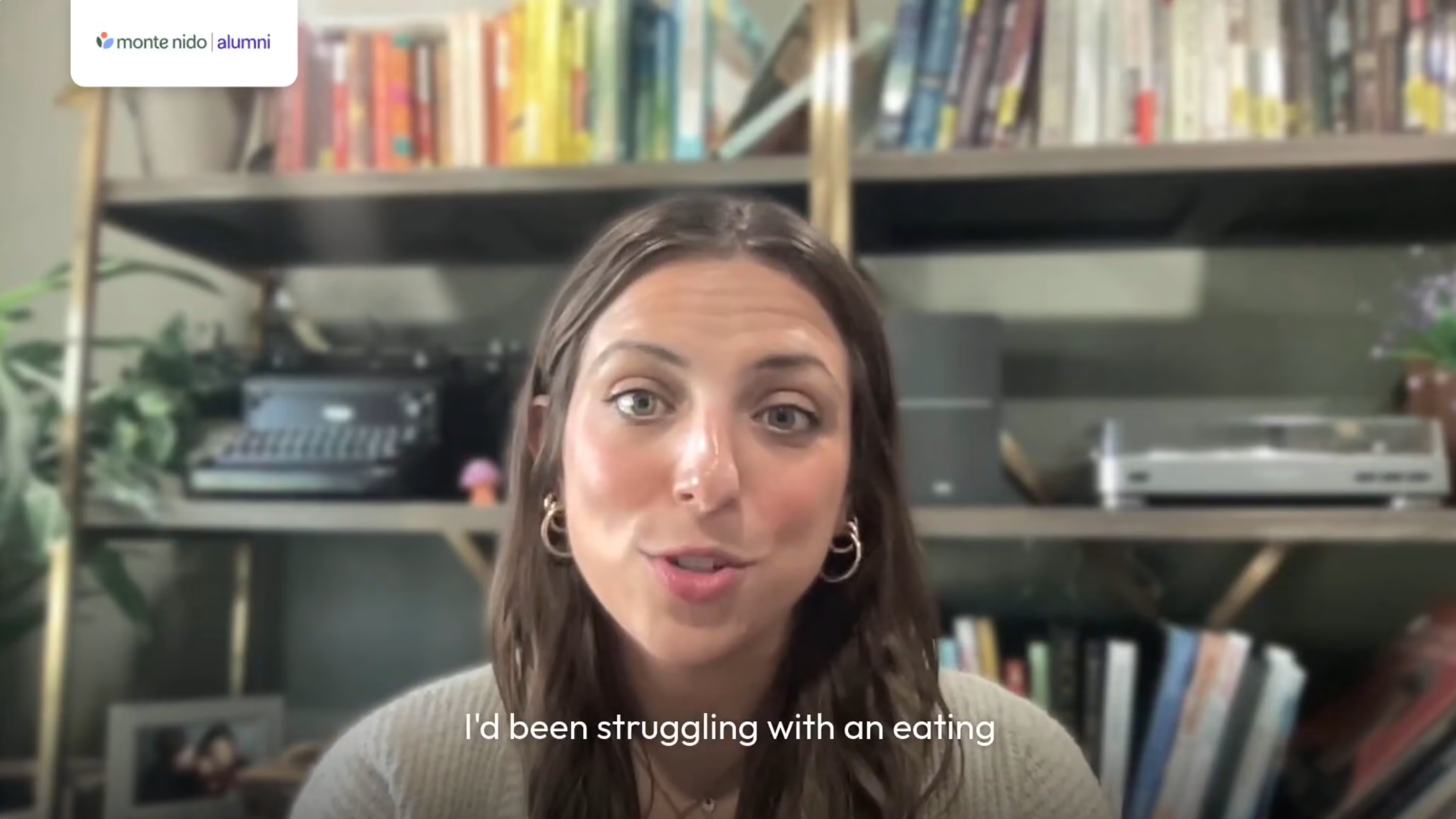
— Blaise
Alum Stories

— Riley
Alum Stories
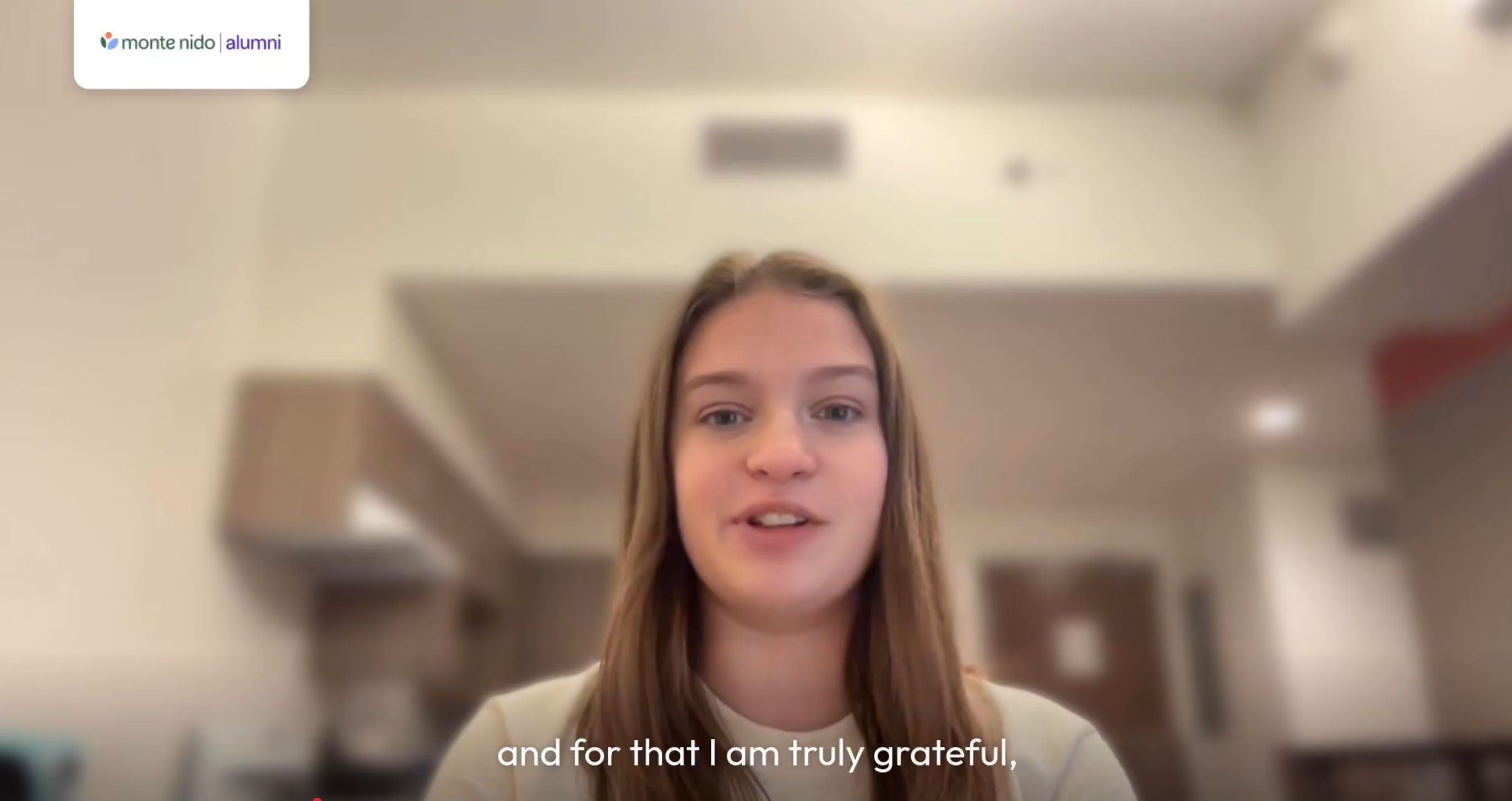
— Christina
Alum Stories
— Isa
Alum Stories
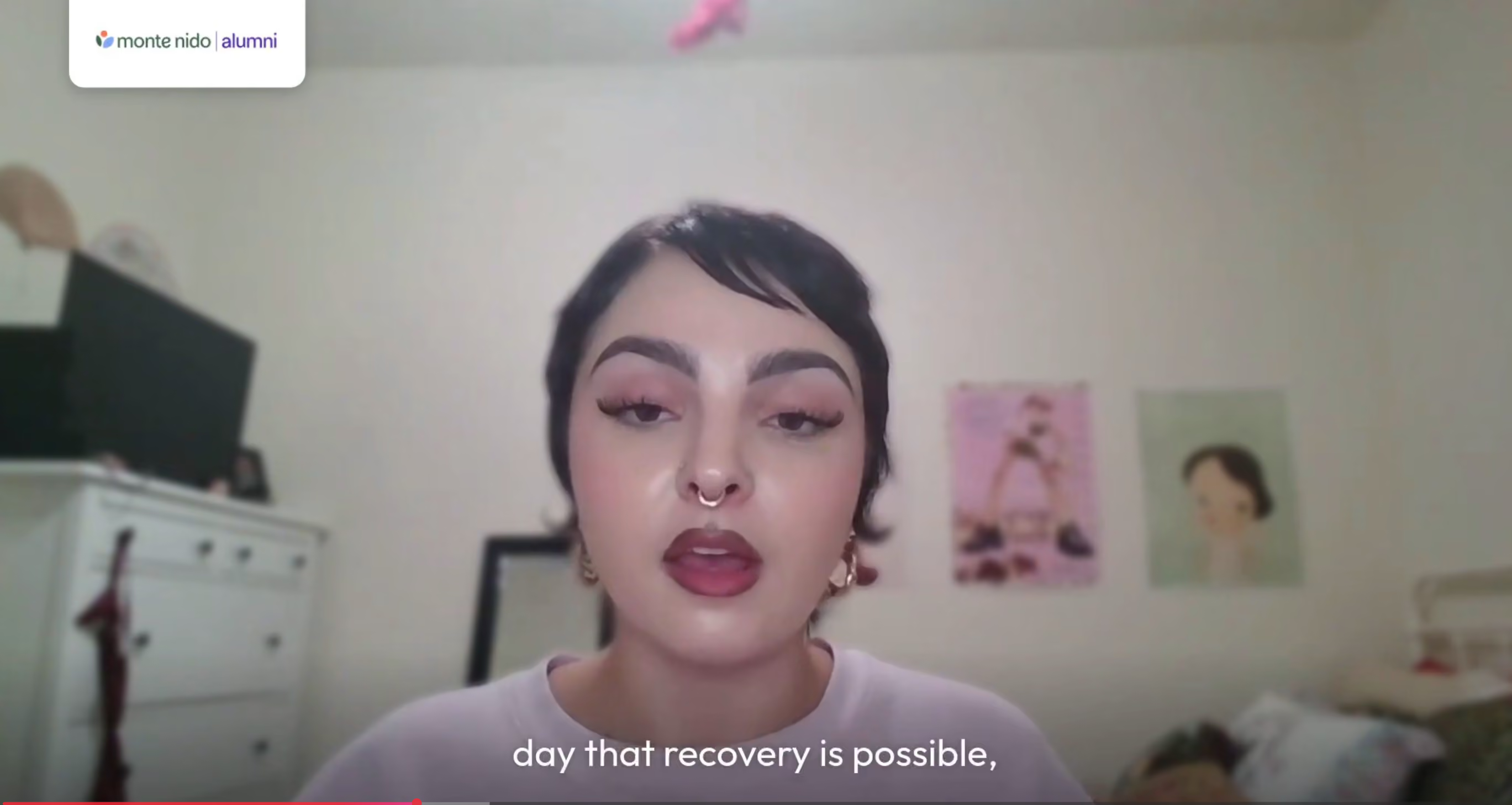
— Emily
Alum Stories
— Sue
Alum Stories
— Alex
Alum Stories
— Nicole
Alum Stories
— Avery
Alum Stories
Alum Stories

Alum Stories

Alum Stories

Alum Stories

Our residential and day programs provide individualized treatment for adults and adolescents (ages 11-17) experiencing a wide range of eating disorders and co-occurring mental health conditions.
Our care teams help clients transition into appropriate level of support based on individual recovery needs.

Remote support options that help maintain continuity throughout recovery


6+ hours a day, 5-6 days a week, supporting increased independence while maintaing clinical structure
3-4 hours a day, 3-5 days a week, flexible support while reintegrating into everyday life and routines


Structured support for individuals who remain medically stable but still need 24/7 recovery care in a comforting home-like environment


Medical and psychiatric stabilization with 24/7 care support

Treatment plans for adults and adolescents are individualized based on each client's unique needs. Services at Monte Nido Atlanta vary but may include:


.svg)
For 30 years, Monte Nido has provided compassionate, evidence-based eating disorder treatment for adolescents and adults. With 50 locations nationwide and virtual care, we deliver personalized treatment across every level of care to support lasting recovery.
of clients rated their experience good to excellent

of clients* discharge treatment with mild to no eating disorder symptoms.
of clients* discharge treatment with mild to no symptoms of depression.

Primary therapists rated 4.4/5 stars
Getting care shouldn't be complicated. We're here to make starting treatment easy for you or your loved one in four simple steps.
Within 24-48 hours of submitting your form, a member of our admissions team will personally reach out to connect with you - review your information, answer your questions, and help to take the next step with confidence.


After your Introductory Chat, you'll connect with one of our admissions counselors to walk through your loved one's needs and medical history - this may include you and your loved one, or just you, depending on what feels most comfortable.
.avif)
After your care assessment, our admissions team will connect with you to:
.avif)
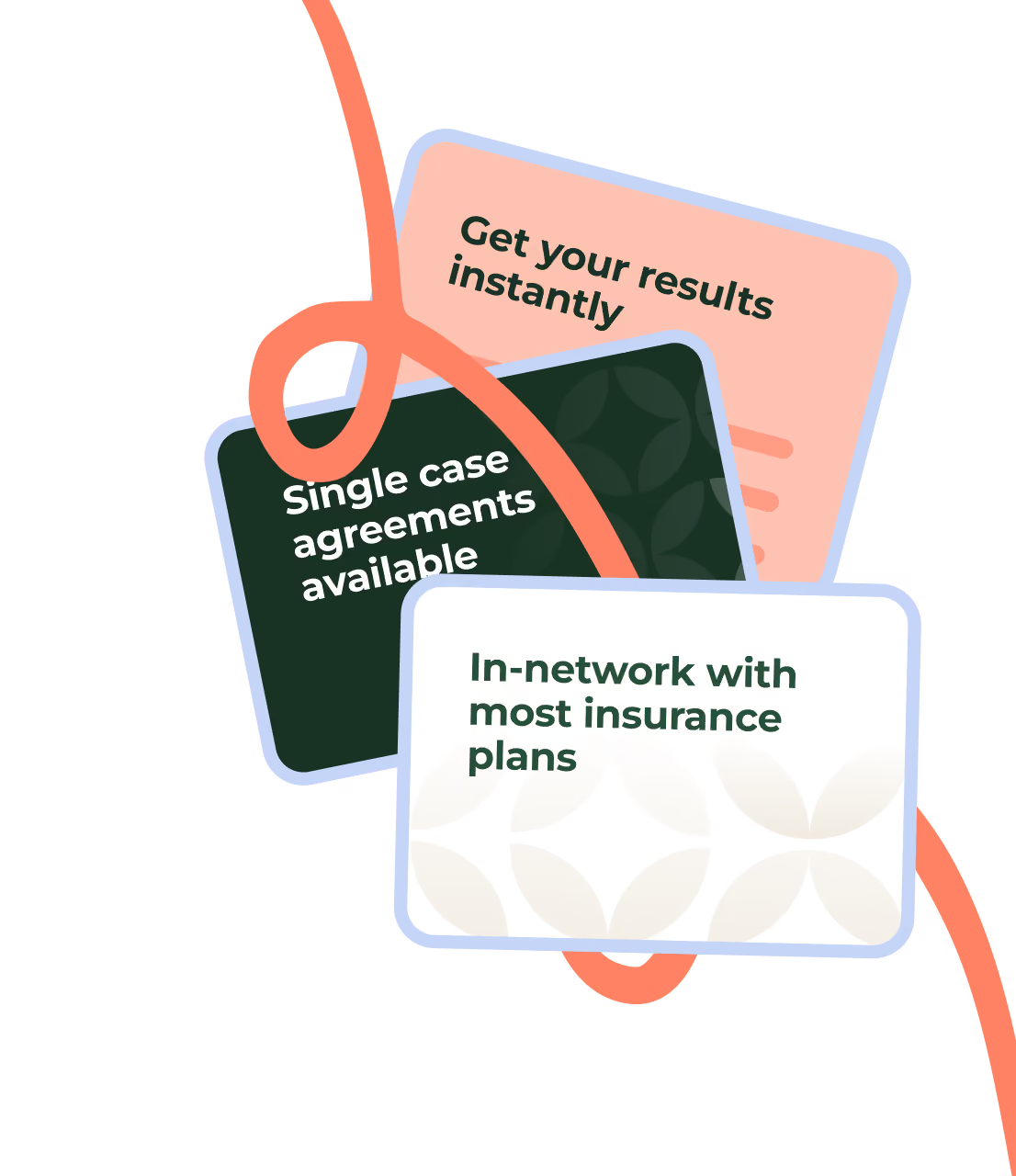
Access to care matters to us. That's why we're in-network with most insurance plans and can often manage single case agreements when needed. Take the first step in your recovery journey today.


.svg)


We want your loved one to feel as comfortable as possible. Family members and loved ones play a big role in your recovery. We encourage them to visit during designated visiting hours or times prearranged with your treatment team; please call the program location to ask about the up-to-date visitation policy and times before arriving.
Family support and education are provided at all levels of care at Monte Nido. We want to help you and those you love heal and have the tools to best support your recovery. Adolescents will also participate in family therapy, where parental involvement is encouraged.
Admissions will advise you and your child with the most up to date packing list before you join us. However, here are items to remember:
Necessary Items
Clothing: We suggest you bring casual, comfortable clothing including underwear, socks and pajamas (without drawstrings and no leggings) as well as layers including long-sleeve shirts and pants to accommodate different temperatures. Skirts and shorts are allowed but must be knee length.
Optional Items:
What NOT to Bring: Leggings/stretchy pants, Wallet/large sums of cash, Drawstring clothing, Shoelaces, Belts, Sharp items/glass items/mirrors, Cords, Razors, Jewelry, Skirts or shorts above knee length, Tank tops, Chemical hair removers, Aerosol containers/products (e.g.hairspray), Alcohol-based products, Bar soap, Loofa, Illegal drugs/alcohol, Lighters/matches, Knitting needles/crochet hooks/yarn, All makeup, Juuls, e-cigarettes, vape pens and/or kits, Cameras, CD player, radio.
If you have more questions or hesitations, we’re here to help. Please contact our admissions team at 888.228.1253 or fill out the form, and someone from our team will reach out to you soon to assist you.
Each client’s journey to recovery is unique, and treatment duration varies. On average, we see an average length of stay of 6 weeks at each level of care.
Our inpatient level of care is for clients needing high medical oversight and who may be too medically compromised for traditional residential eating disorder treatment facilities. We provide 24/7 medical, psychiatric, clinical, and nutritional assessment, oversight, and care as well as NG tube feeding and IV hydration if needed. The goal is for the client to be medically stabilized to step down to residential treatment.
Admissions will advise you with the most up to date packing list before you join us. However, here are items to remember:
Clothing: We suggest you bring casual, comfortable clothing as well as layers to accommodate different temperatures. This includes 1-2 weeks’ worth of comfortable clothing, undergarments, pajamas, two sets of clothes for yoga, comfortable shoes, and slippers. Some programs may have a pool, and usage is determined by the local team. Please check with admissions if packing a swimsuit is advised. You will be able to use the laundry facilities weekly.
Medications: Bring at least a 30-day supply of current medications or vitamins in original prescription containers. Our medical provider will write any additional prescriptions as needed. If a medication you take is difficult to find, notify us before admission so we can plan.
Personal Items: Bring toiletries (e.g., shampoo, conditioner, body wash, deodorant, toothpaste, and brush) and cosmetics you use daily. You may also bring hair styling tools, razors, tweezers, and nail accessories. For the safety of all clients, some items may be held when you are not using them.
Valuables: Money may be needed for outings when they occur. Bringing a credit card is preferable for your safety, but you may bring a small amount of cash if you do not have access to one.
Self-Care: Bring things that help ground and comfort you (e.g., musical instruments, coloring books, religious texts, a favorite blanket).
Technology: You may bring your cell phone, but please note that you will not have access to it unless there is an emergency or potentially until the end of your stay when the team deems it appropriate.
Personal Identification: You will need a copy of your driver’s license, passport, or other ID card, as well as a copy of your insurance card.
School Materials: Adolescent clients will have school 5 days per week, so bring whatever you need for current courses (e.g., books, laptop, or tablet). We partner with Learn Well to meet your educational needs year-round. You will have access to your laptop or tablet only during school times.
What NOT to Bring: food items, towels, bedding, sentimental or highly valuable items (e.g., expensive jewelry or electronics). We cannot be responsible for lost items. Please also arrange to be dropped off at the treatment center, as you are not permitted to drive and park your car onsite during the duration of your stay.
Visitors can bring you additional approved items, or you can purchase additional items online or on outings as needed.
If you have more questions or hesitations, we’re here to help. Please contact our admissions team at 888.228.1253 or fill out the form, and someone from our team will reach out to you soon to assist you.
Our goal is to help make eating disorder treatment accessible. We’re committed to working with families to access care and are in-network with many major insurance companies. We also coordinate single-case agreements with providers if we are not in-network. Learn more about our financial and insurance considerations.
Every recovery journey is different. The length of stay in our residential program varies based on several factors and a typical stay is around 6 weeks.
Admissions will advise you and your loved one with the most up to date packing list before you join us. However, here are items to remember:
Clothing: We suggest you bring casual, comfortable clothing as well as layers to accommodate different temperatures. This includes 1-2 weeks’ worth of comfortable clothing, undergarments, pajamas, two sets of clothes for yoga, comfortable shoes, and slippers. Some programs may have a pool, and usage is determined by the local team. Please check with admissions if packing a swimsuit is advised. You will be able to use the laundry facilities weekly.
Medications: Bring at least a 30-day supply of current medications or vitamins in original prescription containers. Our medical provider will write any additional prescriptions as needed. If a medication you take is difficult to find, notify us before admission so we can plan.
Personal Items: Bring toiletries (e.g., shampoo, conditioner, body wash, deodorant, toothpaste, and brush) and cosmetics you use daily. You may also bring hair styling tools, razors, tweezers, and nail accessories. For the safety of all clients, some items may be held when you are not using them.
Valuables: Money may be needed for outings when they occur. Bringing a credit card is preferable for your safety, but you may bring a small amount of cash if you do not have access to one.
Self-Care: Bring things that help ground and comfort you (e.g., musical instruments, coloring books, religious texts, a favorite blanket).
Technology: You may bring your cell phone, but please note that you will not have access to it unless there is an emergency or potentially until the end of your stay when the team deems it appropriate.
Personal Identification: You will need a copy of your driver’s license, passport, or other ID card, as well as a copy of your insurance card.
School Materials: Adolescent clients will have school 5 days per week, so bring whatever you need for current courses (e.g., books, laptop, or tablet). We partner with Learn Well to meet your educational needs year-round. You will have access to your laptop or tablet only during school times.
What NOT to Bring: food items, towels, bedding, sentimental or highly valuable items (e.g., expensive jewelry or electronics). We cannot be responsible for lost items. Please also arrange to be dropped off at the treatment center, as you are not permitted to drive and park your car onsite during the duration of your stay.
Visitors can bring you additional approved items, or you can purchase additional items online or on outings as needed.
If you have more questions or hesitations, we’re here to help. Please contact our admissions team at 888.228.1253 or fill out the form, and someone from our team will reach out to you soon to assist you.
Our goal is to help make eating disorder treatment accessible. We’re committed to working with families to access care and are in-network with many major insurance companies. We also coordinate single-case agreements with providers if we are not in-network. Learn more about our financial and insurance considerations and visit our insurance checker today.
Every recovery journey is different. The length of stay in our residential program varies based on several factors and a typical stay is around 6 weeks.
For clients with co-occurring substance disorders, our day treatment programs support sober housing when available and accommodate attendance to outside 12-step meetings. We’re here to help you to be healthy in all aspects of your life, and we applaud you for healing many facets of your health simultaneously.
IOP (Intensive Outpatient Program) and PHP (Partial Hospitalization Program) are both structured mental health treatment programs that offer more intensive care than regular outpatient therapy but differ in intensity and time commitment.
IOP typically involves 3-5 days of programming for around 3-4 hours per day while working with your outpatient providers. This allows clients to maintain their daily routines such as work or school. It focuses on providing support and strategies for managing symptoms while clients live at home.
PHP is more intensive, running from 5-6 days per week for 6 or more hours per day. It provides a higher level of care, but clients return home at the end of the day. PHP is designed for individuals who need significant support but do not require 24-hour supervision.
For Monte Nido programs, the number of days and times may differ slightly by location. For more information reach out to admissions here.
The length of your program is based on several factors, including your specific recovery needs, the severity of the eating disorder, your personalized treatment progress, and the program’s structure at the location you attend.
For some individuals, treatment might be shorter in duration, while others could extend to several months, depending on your progress and treatment goals.
Our adolescent day (PHP and IOP) programs re ideal for teens who are medically stable but who require the structure and support of day treatment. Parents will take on a more active role at this level of care. Family-Based Informed Treatment, used within our adolescent programming, is designed to give parents of adolescent clients a leading role in helping their child reduce disordered eating behaviors, restore weight, and resume proper adolescent development. Our team will support the whole family through family programming, therapy, and resources so you will have the tools to support and sustain your child’s recovery during and after treatment.
IOP (Intensive Outpatient Program) and PHP (Partial Hospitalization Program) are both structured mental health treatment programs that offer more intensive care than regular outpatient therapy but differ in intensity and time commitment.
IOP typically involves 3-5 days of programming for around 3-4 hours per day while working with your outpatient providers. This allows clients to maintain their daily routines such as work or school. It focuses on providing support and strategies for managing symptoms while clients live at home.
PHP is more intensive, running from 5-6 days per week for 6 or more hours per day. It provides a higher level of care, but clients return home at the end of the day. PHP is designed for individuals who need significant support but do not require 24-hour supervision.
For Monte Nido programs, the number of days and times may differ slightly by location. For more information reach out to admissions here.
The length of your program is based on several factors, including your specific recovery needs, the severity of the eating disorder, your personalized treatment progress, and the program’s structure at the location you attend.
For some individuals, treatment might be shorter in duration, while others could extend to several months, depending on your progress and treatment goals.
Please reach out here
or Call
to speak confidentially with one of our eating disorders specialists to start the road to recovery.

.svg)


.avif)

