
.avif)

.svg)

How Queer Worldmaking Offers a Better Path Forward for LGBTQ+ Treatment
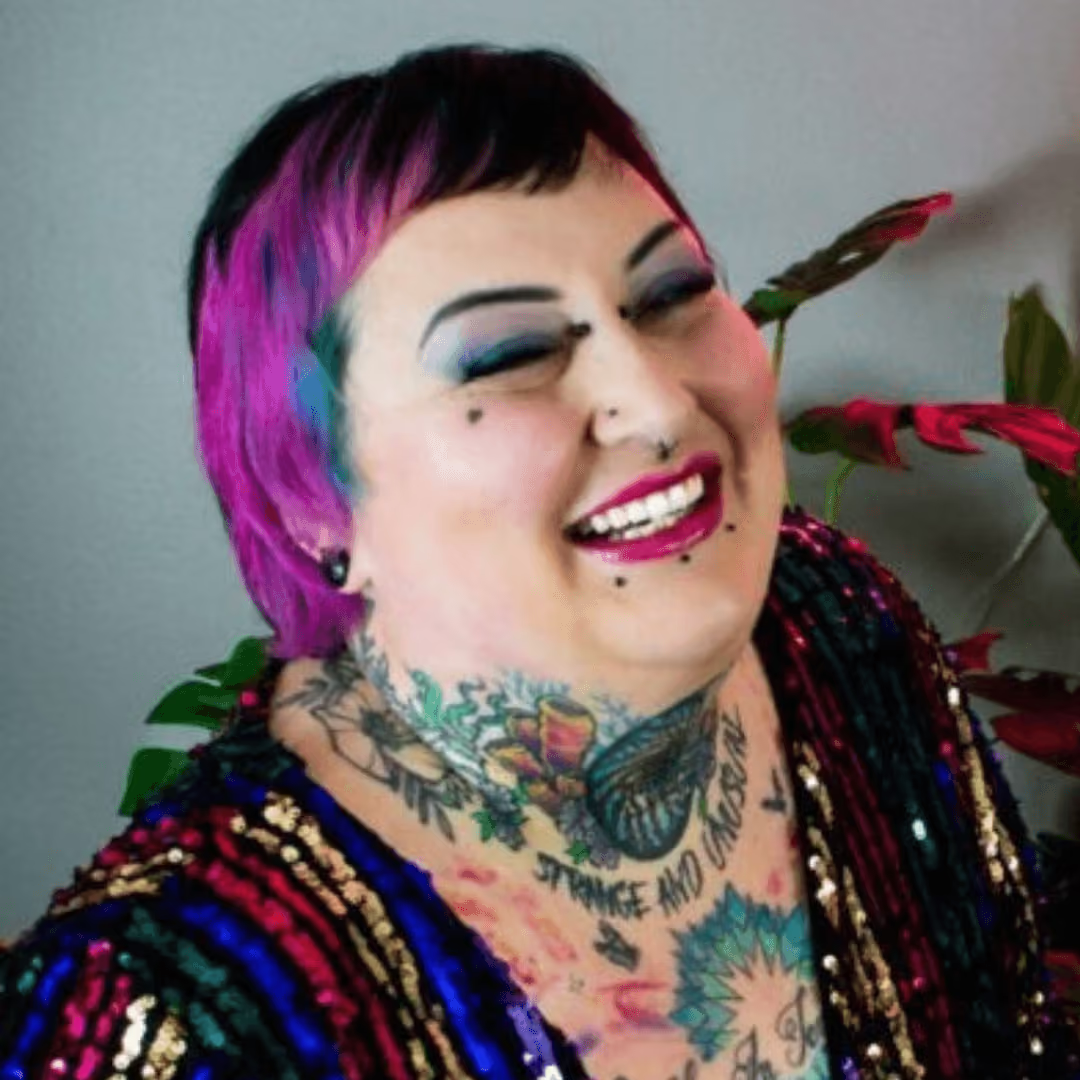
In this continuing education webinar, Why Traditional Treatment Fails LGBTQ+ Populations & How Queer Worldmaking Offers a Better Path Forward, Art Therapist, Researcher, and Author Wednesdae R. Ifrach, REAT, ATR-BR, ATCS, LPC, NCC, CLAT, RMT (they/them), explored how traditional eating disorder treatment models can unintentionally reinforce barriers for LGBTQ+ individuals and how Queer Worldmaking offers a more affirming framework for care.
Eating disorder treatment is most effective when clients feel seen, understood, and safe enough to engage in recovery. For LGBTQ+ individuals, that safety cannot be assumed. Many clinical systems still rely on frameworks shaped by heteronormativity, cisnormativity, binary gender expectations, and weight-centered definitions of progress. When treatment does not account for these realities, recovery can feel less like healing and more like pressure to conform.
Queer Worldmaking offers a different path. Instead of asking LGBTQ+ clients to fit into treatment environments that were not built with them in mind, this framework invites clinicians to co-create care that centers autonomy, safety, joy, and belonging.
Key Takeaways
- Traditional eating disorder treatment models may unintentionally create barriers for LGBTQ+ clients. Many approaches rely on heteronormative, cisnormative, and weight-centered assumptions that do not fully reflect LGBTQ+ experiences.
- Minority stress can play a significant role in eating disorder development and recovery. Experiences of stigma, discrimination, exclusion, and identity-related stress can shape body image concerns and disordered eating behaviors.
- Queer Worldmaking offers a more affirming framework for care. Rather than asking clients to conform to existing systems, Queer Worldmaking centers autonomy, safety, belonging, and identity affirmation in the recovery process.
- Recovery can include gender euphoria, not just symptom reduction. Treatment may be more effective when it helps clients build experiences of authenticity, joy, and alignment with their identities.
- Small clinical changes can meaningfully improve treatment experiences. Inclusive language, affirming environments, individualized goals, and trauma-informed care can help LGBTQ+ clients feel safer and more supported in recovery.
Why LGBTQ+ clients face distinct eating disorder risks
Eating disorders do not develop in isolation. For many LGBTQ+ individuals, body distress and disordered eating are shaped by chronic exposure to stigma, discrimination, exclusion, and pressure to navigate unsafe environments.
Minority stress can contribute to eating disorder symptoms in several ways:
- Disordered eating may become a coping strategy for chronic external stigma.
- Discrimination may become internalized as body dissatisfaction.
- Stress may increase disordered behaviors used for numbing.
- Symptom escalation may lead to increased isolation.
This cycle matters clinically because it reframes eating disorder behaviors as more than individual symptoms. In some cases, they may represent attempts to manage distress, reduce visibility, alter the body for safety, or survive environments that have not affirmed the client’s identity.
The limits of traditional eating disorder treatment models
Traditional eating disorder treatment models often rely on assumptions that may not reflect LGBTQ+ experiences. These assumptions can show up in assessment tools, treatment goals, documentation, meal planning, body image work, and definitions of recovery.
Common barriers include:
- BMI-centered recovery metrics
- Gender-binary treatment goals
- Target weights tied to gender-normative expectations
- Limited representation of queer and gender-expansive bodies
- Treatment models that do not account for minority stress or medical trauma
This creates a “normative gap,” where standard clinical approaches fail to meet the needs of LGBTQ+ clients. For example, a goal weight may be clinically intended as a marker of stability, but if it is framed through binary gender expectations, it may feel invalidating or disconnected from the client’s lived experience.
More individualized approaches can help close this gap. Instead of relying on binary goals, clinicians can consider:
- The client’s unique genetic and metabolic history
- Functional recovery markers, such as energy, hunger cues, and stability
- Sex assigned at birth
- Gender identity
- Desired gender presentation
- Hormone replacement therapy, when applicable
Medical trauma and help-seeking
For many LGBTQ+ clients, healthcare systems have not historically felt safe. Experiences of pathologization, discrimination, misgendering, and invalidation can shape how clients approach treatment, documentation, and diagnosis.
This can create understandable barriers to care, including:
- Distrust of medical professionals
- Fear of being reduced to a diagnosis
- Concern that chart language may be used against them
- Hesitancy to disclose identity-related information
- Fear that providers will misunderstand body-related goals
Before treatment can be effective, clinicians often need to establish safety through a trauma-informed alliance. This means recognizing that hesitancy, guardedness, or distrust may reflect prior harm rather than resistance.
Moving beyond dysphoria reduction
Affirming care should not focus only on reducing distress. For gender-expansive clients, recovery may also involve building toward gender euphoria: the sense of rightness, joy, and alignment that can occur when the body, identity, and expression feel congruent.
Clinicians can support this shift by asking questions such as:
- When does your body feel most authentically yours?
- What helps you feel connected to your identity?
- What experiences create a sense of joy or alignment?
- What would make recovery feel affirming rather than restrictive?
This approach expands treatment goals beyond symptom reduction. It allows joy, embodiment, and identity alignment to become meaningful markers of progress.
What Queer Worldmaking means in eating disorder care
Queer Worldmaking is a framework rooted in the idea that marginalized communities create alternative spaces, relationships, and systems within worlds that were not designed for them. In eating disorder treatment, this means moving from recovery as compliance to recovery as liberation.
Traditional models may ask: Is the client following the plan?
Queer Worldmaking asks:
- Does this treatment environment affirm the client’s whole identity?
- Do recovery goals support autonomy and bodily safety?
- Are clinical metrics helping or erasing the client’s lived experience?
- Is the client being asked to conform, or are we co-creating care that supports freedom?
Core principles include:
- Refusing normative templates
- Creating affirming environments
- Dethroning weight and body normalization as the only markers of healing
- Building recovery collaboratively with the client
Clinical applications of Queer Worldmaking
Queer Worldmaking becomes most useful when it shapes daily clinical practice. Small changes in language, documentation, environment, and goal-setting can meaningfully affect whether clients feel safe and respected.
De-center normative goals
Recovery goals should be clinically sound without reinforcing binary or weight-centered assumptions.
Practical changes include:
- Using blind weighing protocols when appropriate
- Tracking metabolic stability over weight alone
- Avoiding binary goal weights
- Centering functional recovery markers
- Prioritizing body autonomy
Prioritize body euphoria
Body image work can move beyond “fixing” distress and toward identifying experiences of authenticity and joy.
Clinicians can explore:
- What makes the body feel safe
- What supports gender alignment
- What increases comfort in public and private spaces
- What helps the client experience the body as their own
Build affirming treatment spaces
The treatment environment communicates safety before a client says a word. A “worlded” clinical space signals that clients do not need to code-switch, minimize, or explain their identity in order to receive care.
Affirming environmental changes include:
- Removing gendered prefixes from forms
- Including space for affirmed names
- Displaying imagery of diverse, nonbinary bodies
- Offering gender-neutral restrooms
- Creating inclusive waiting areas
Reclaim somatic power
For clients whose bodies have been shaped by stigma, oppression, or dysphoria, body-based work must be approached with care. Somatic resourcing can help clients build internal safety, reconnect with bodily cues, and identify sensations connected to joy.
This may include:
- Grounding exercises
- Body-based check-ins
- Exploring what safety feels like physically
- Externalizing dysmorphia as a response to systemic bias
- Reconnecting with the body through autonomy rather than control
Language shifts that support affirming care
Clinical language can either reinforce normative assumptions or help clients feel more accurately understood.
Examples of affirming shifts include:
- From “normalizing BMI/weight” to “restoring body autonomy”
- From “male/female patterns” to “individualized mapping”
- From “target weight” to “Health at Every Size”
- From “fixing body image” to “navigating systemic oppression”
These shifts are not just semantic. They help clinicians frame recovery in ways that honor the client’s body, identity, and context.
Intake questions that expand assessment
An affirming intake process should invite clients to describe how identity, safety, body image, and environment intersect.
Helpful questions include:
- How does your identity influence your body experience in public versus private spaces?
- Does your current world support your identity?
- How do traditional beauty standards conflict with your authentic self?
These questions help clinicians assess more than symptoms. They also reveal the environments, pressures, and supports shaping the client’s recovery.
Layered marginalization and clinical complexity
LGBTQ+ clients are not defined by sexuality or gender alone. Race, disability, neurodivergence, body size, and other identities also shape experiences of safety, access, and care.
Layered marginalization can increase clinical complexity through:
- Compounding discrimination
- Reduced access to affirming providers
- Heightened mistrust of systems
- Greater pressure to compartmentalize identity
- Increased risk for isolation
Inclusive care must affirm all parts of identity, not only the one most visible in treatment.
Recovery as liberation: improving LGBTQ+ treatment outcomes
For LGBTQ+ clients, recovery can be more than stopping eating disorder behaviors. It can also be a process of reclaiming freedom, safety, embodiment, and joy.
This means treatment should support clients in building lives where they can:
- Experience their bodies with more autonomy
- Feel affirmed in public and private spaces
- Access community and belonging
- Challenge restrictive beauty and gender norms
- Define recovery in ways that are meaningful and sustainable
Queer Worldmaking challenges clinicians to look beyond whether a client is complying with care and ask whether the care environment itself is worth belonging to. When treatment centers autonomy, identity, and joy, recovery becomes not only a clinical outcome, but a pathway toward a more livable world.
Explore more of Monte Nido’s continuing education sessions.
.png)

.avif)